
Prepare with confidence
Situation description
Our client, Consumer Goods Co. (CGC), is one of the main consumer goods companies in the U.S. Its skincare division has been focused on its best-selling sunscreen product, Summertime Sunscreen (Product A), which holds 2% of the U.S. sunscreen market share.
CGC recently developed a new formulation of sunscreen, Product B, and is planning for launch.
Question #1
What is product B?
How does it differ from A?
What is its value proposition?
Which competitors and customers matter?
How big is the sunscreen market?
What trends drive demand?
Also consider stakeholders, branding, co-positioning and macroeconomic impacts.
Question #2

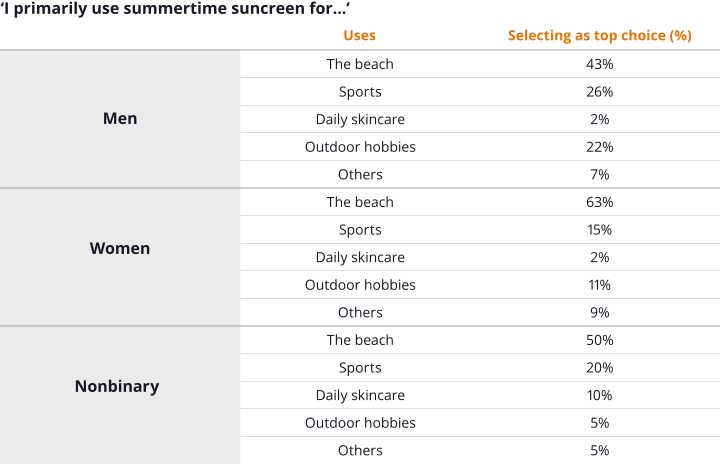
Question #3
You could target:
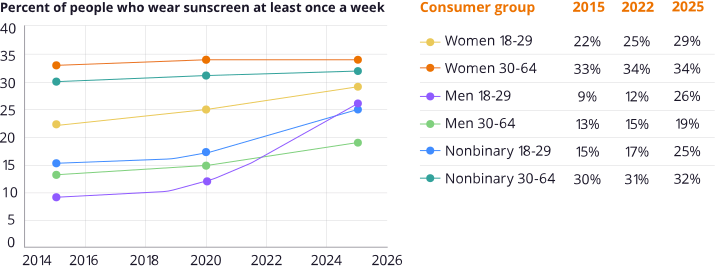
Nonbinary people ages 18 to 29, a fast-growing group with 25% frequent users
Nonbinary people ages 30 to 64, steady but large; ensure research depth
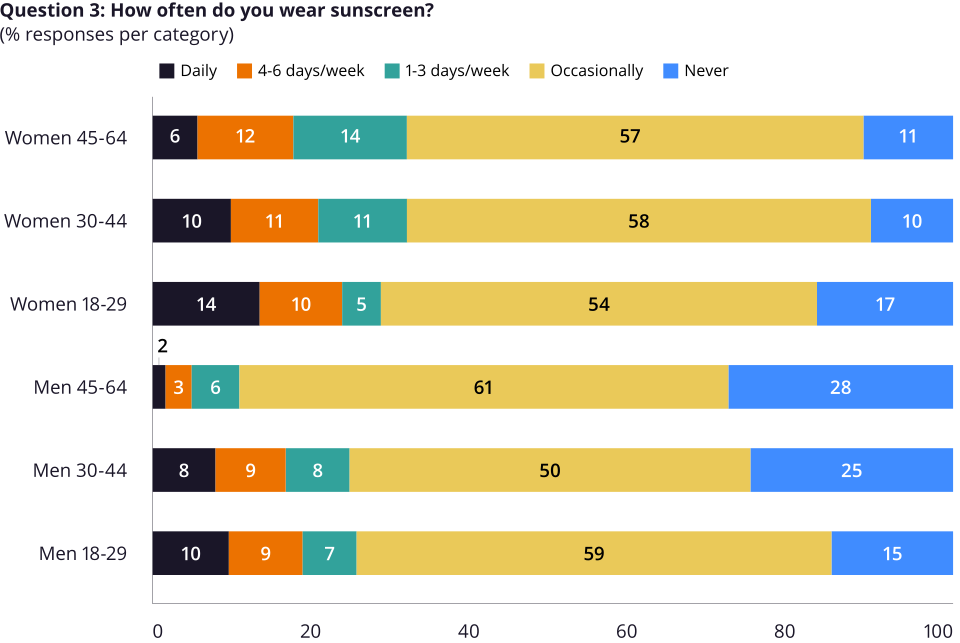
Women ages 30 to 64, affluent and loyal
Women ages 18 to 29, heavy daily users
Men ages 30 to 64, low usage
Men ages 18 to 29, growing but nearing saturation
Additional questions you might ask when selecting a segment
What drives product growth?
How might competition, brand loyalty and multiproduct use shape the segment.
What might phased targeting look like?
Who might be a core target market for launch and how might CGC broaden to a larger market over time?
Question #4
To estimate profit for U.S. men ages 18 to 29:
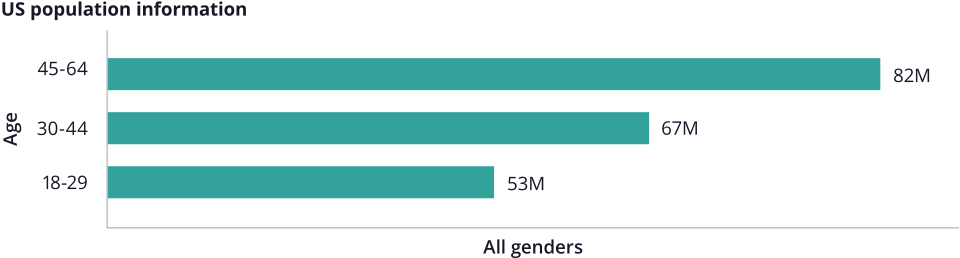
Total population: 53 million
Roughly half are men: 27 million
About 26% use sunscreen regularly: 27 million times 26% equals 7 million
Estimated 2% market share: 7 million times 2% equals 140,000 buyers
Profit per product: $24.99 minus $9.99 equals $15
Assuming one purchase a year: $15 times 140,000 equals about $2.1 million in annual profit