
Prepare with confidence
Situation description
Our client, Zoltners, expects the FDA will soon approve its drug, SINHA, for the treatment of chronic obstructive pulmonary disease (COPD). During clinical trials, SINHA achieved a best-in-class 30% reduction in exacerbations (severe episodes that can lead to hospitalization), a key endpoint in COPD.
Zoltners is excited about the potential of this product and has asked ZS to help determine a suitable price for SINHA. This decision is crucial not only for maximizing the drug’s market potential and ensuring accessibility for millions of patients but also for solidifying Zoltners’ position in the pharmaceutical landscape.
Question #1
Question #2
Question #2b
Question #2c
Question #2d
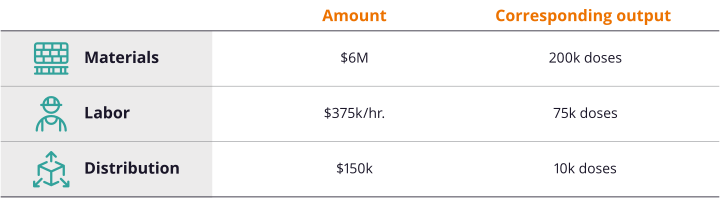
Based on the production costs provided, we can determine that it costs $50 to produce each dose of SINHA:
1. Materials: $6 million for 200,000 doses equals $30 per dose
2. Labor: $375,000 per hour for 75,000 doses equals $5 per dose
3. Distribution: $150,000 for 10,000 doses equals $15 per dose
Question #2e
Question #2f
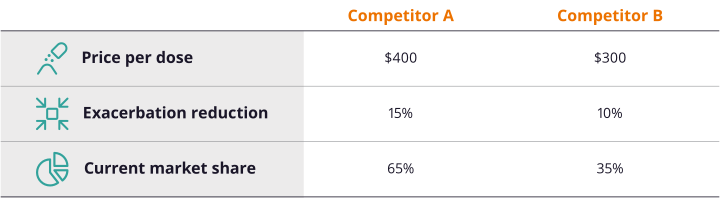
Cost-based: Pricing at $300 (the lowest competitor) yields 80%+ margins.
Value-based: Patients may value SINHA’s efficacy, but 35% choose cheaper, less effective options, limiting price flexibility.
Competition-based: At $300, rivals lose both cost and efficacy advantages.
Question #2g
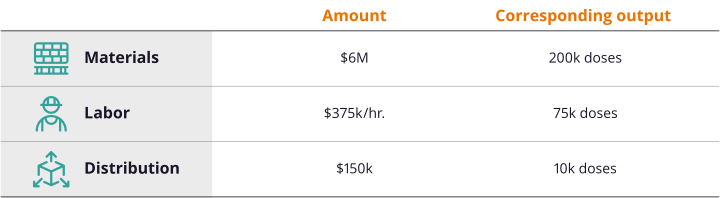
40 working hours/week times 52 weeks/year equals 2,080 working hours/year (round to 2,000)
75,000 doses/hour times 2,000 hours/year equals 150 million doses/year
150 million doses developed divided among 26 doses/treatment equals about 6 million patients treated/year
6 million patients treated/year with 15 million in-market patients/year translates to about 40% utilization, suggesting expansion is needed and strategic
Question #3
To deliver a well-supported recommendation, you’ll need to synthesize the key insights you’ve captured and supplement them with good business judgment.
Based on our analysis of the information provided, our recommendation is to price SINHA at $300/dose.