Bridging the gap: Aligning physician intentions and actions in pediatric asthma treatment
Asthma is one of the most common chronic childhood diseases, affecting approximately 7%–8% of adolescents in the U.S. Poorly managed asthma can disrupt children’s daily lives and, in severe cases, can result in hospitalization and death, so effective treatment is crucial.
We know that factors outside of a person’s medical and genetic history play a substantial role in health outcomes. These factors include, but aren’t limited to, social drivers of health (SDOH) and health-related social needs (HRSNs). Research has also found significant demographic disparities, as reported in JAMA Network, where Black and Hispanic children with asthma have higher rates of emergency department visits and hospitalization and are less likely to be able to see a specialist.
As part of ZS’s work to understand care gaps and health inequities, we investigated the impact of SDOH and HRSNs on diagnosis and treatment using medical records and claims. We now present a complementary study based on the intention-action gap in physicians. The intention-action gap is the difference between what a physician believes they should do and what they actually do and is closely related to implicit biases. We also provide evidence on how under-consideration of factors like environmental triggers and rescue medication use may affect racial differences in treatment rate.
Closing the intention-action gap will allow more patients to receive the care they need and may reduce health inequities. But truly creating change will require life sciences companies and other stakeholders to work together. We’ll outline the steps that they can take to create a more equitable healthcare journey for patients.
Understanding physicians’ choices
Our research was done in collaboration with Dr. Daniel Fein and Dr. Laura Conrad of the department of pediatrics at Albert Einstein College of Medicine and the Children’s Hospital at Montefiore, both located in the Bronx, New York. These results were presented at the 2024 Pediatric Academic Societies Meeting in Toronto. The study compared the differences between factors the doctors stated were important and those that were actually considered in doctors’ pediatric asthma clinical decisions, including appropriate treatment choice. Our study also explored the physicians’ perceptions of health equity and how their practices have deployed equity-related programs.
We conducted the research between July and August 2023, administering an online survey to 307 U.S. physicians who have 3–30 years of clinical practice experience and who spend at least 70% of their time treating patients. The surveyed physicians included allergists, pulmonologists, pediatricians and general or family medicine practitioners from both academic and community practice settings. Respondents were presented with a set of patient profiles and asked to make discrete choices about the next treatment for each patient. After the discrete choice section, physicians were asked about their perceptions of health equity and how they incorporated socioeconomic factors into pediatric asthma treatment decisions.
Opportunities to close health equity gaps
Some of our key findings included:
Only 4 in 10 physicians are familiar with the concept of health equity, and a similar proportion indicates that their organizations have programs for addressing health equity and SDOH. Among the respondents, about half of the physicians in urban settings were familiar with the concept of health equity compared to only a quarter of physicians in rural settings. By specialty, about half of pulmonologists were familiar with the concept compared to a quarter of pediatricians. Although only 40% of physicians were familiar with the concept of health equity, 2 in 3 believe that Caucasian patients have an easier time accessing care, and 3 in 4 physicians believe the same for patients with incomes higher than $150k per year.
These findings indicate that there are opportunities to implement more health equity education and programs, both for physicians and practice and system administration.
- Physician education: Despite the fact that the majority of surveyed physicians understand the impact of racial and income inequity on access to care, most aren’t familiar with the concept of health equity. Life sciences companies can help by providing educational materials or sponsoring continuing medical education programs. Investment in these initiatives can help physicians provide more appropriate care, in line with most life sciences companies’ marketing objectives.
- Partnership programs:Only 40% of physicians state their organizations have programs to address SDOH. Many life sciences companies already have partnerships to bring programs to underserved patients, such as the iHEART program between Novartis and Indiana University or the Black Mamas Matter Alliance between Johnson & Johnson and advocacy groups and professional societies. Partnerships are powerful tools for coordinating multiple stakeholders as they navigate through the logistical gridlocks and misaligned incentives of U.S. healthcare. To start and maintain partnerships, life sciences companies should understand the key drivers of partnership success.
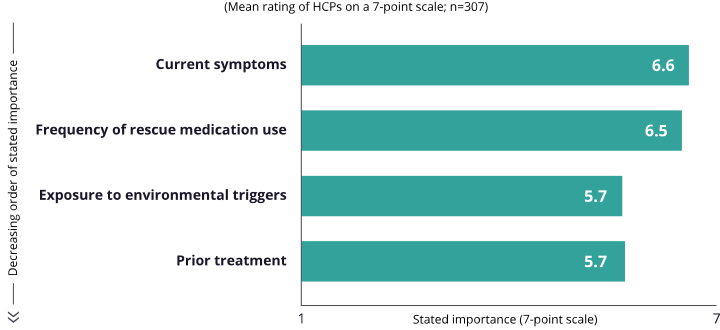
Physicians believe that clinical factors and environmental factors are most important in making treatment decisions, with other SDOH factors rating lower in their perceptions.The emphasis on environmental triggers is an acknowledgment of individual patients’ different HRSNs. Exposure to environmental triggers is rightfully an important driver of decisions regarding asthma and should be discussed with the patient and documented.
FIGURE 1: Stated importance in treatment decision-making (on a seven-point Likert scale)
In practice, physicians base most of their decisions on solely clinical factors, with about 70% of decision-making attributable to prior treatment, symptoms and rescue medication use. The remainder is split between age (10%); environmental triggers (5%) and gender, race and income (~15%). Note: we separate age from other sociodemographic factors, as it is included in most pediatric asthma guidelines.
FIGURE 2: Actual importance in treatment decision-making (from discrete choice modeling)

Putting these two observations together, we see a clear intention-action gap in physicians in treatment decision-making. Specifically, physicians lower the relative importance of age, environmental triggers and rescue medication in actual decision-making relative to their beliefs.
FIGURE 3: Importance of attributes when making a treatment decision
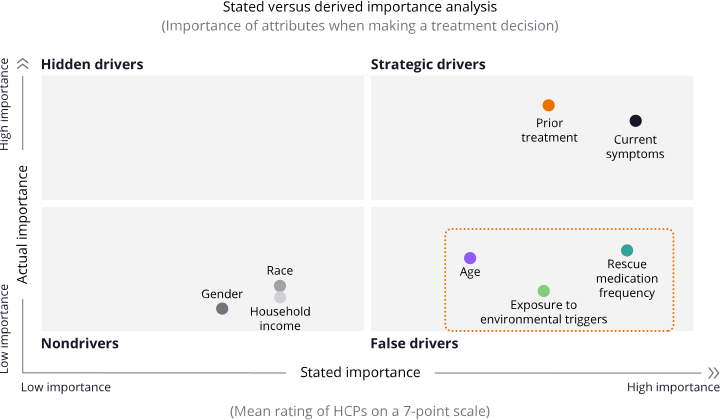
FIGURE 4: Defining the kinds of drivers
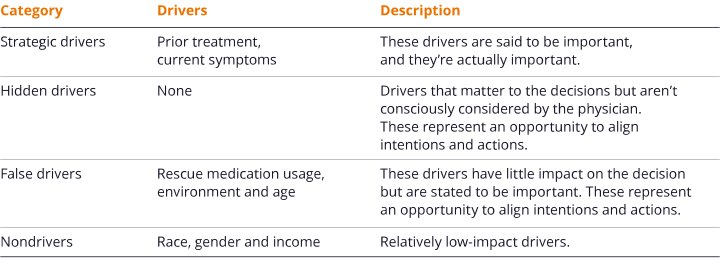
False drivers and hidden drivers represent opportunities to bring physician intention and behavior into alignment. In our study, no decision drivers fall into the hidden driver category, indicating that physicians are generally aware of all the factors that impact their decision-making. However, age, environmental triggers and rescue medication frequency all land in the false drivers category. These three factors are all believed to be important, but they fall by the wayside when decisions are made. Notably, environmental triggers and rescue medication frequency are both more frequent in Black and Hispanic children, indicating that the intention-action gap disproportionately affects these communities.
We can bring physician beliefs and actions into greater alignment with programs that focus on:
- Patient awareness and empowerment: Patients can play a large role in bridging the intention-action gap by being aware of potential gaps and actively advocating for themselves. This may involve bringing a trusted advocate to appointments, clearly communicating their needs and concerns and asking questions. Life sciences companies can support this process by raising awareness about SDOH, such as environmental triggers of asthma. They can also provide patients with the tools and language to discuss these issues effectively with their physicians. These approaches help empower patients and educate providers, leading to lower disparities and improving patient outcomes, particularly among Black and Hispanic populations.
- Augmenting institutional processes and policies: Health system processes often lack clear guidelines for incorporating SDOH into clinical practice, making it difficult for healthcare providers to incorporate these factors effectively into their treatment decisions. For instance, a 2023 content analysis in the Journal of Neurotrauma concluded that the majority of research underlying CDC guidelines did not even evaluate the impact of SDOH. Life sciences companies can work with health systems and provider practices to develop and update guidelines, update electronic health record and clinical decision support systems and aid in physician education.
Our study sheds light on the significant gap between physician awareness of health equity principles and their application in pediatric asthma treatment decision-making. Addressing physician biases will help close care gaps and advance health equity. As we’ve discussed in previous articles, life sciences companies have a significant stake in the issue and can take further action by expanding patient access to treatments, improving patient outcomes, enhancing competitive differentiation and enabling partnerships with other healthcare stakeholders. Strategic investment in programs such as these will contribute to a more equitable healthcare system and present competitive advantages.