The CDC awards ZS’s novel approach to AI and data analytics
In the ever-evolving field of healthcare analytics, ZS continually pushes the boundaries of innovation. We empower our people to explore emerging technologies and apply their learnings to solve complex, real-world problems. Recently, a team of ZSers participated in a case challenge sponsored by the CDC’s National Center for Injury Prevention and Control (NCIPC). Their project—using unsupervised machine learning to analyze narrative medical data related to older adult falls—earned them the award for “Most Novel Approach.”
Where passion changes lives
Falls among adults aged 65 and older are the leading cause of injury-related deaths in the U.S., yet many are preventable with early interventions. To better understand the issue, the CDC and NCIPC—in collaboration with the National Electronic Injury Surveillance System (NEISS)—collected tens of thousands of medical record narratives. The challenge: Use unsupervised machine learning to extract insights from this underutilized data.
Narrative records are notoriously difficult to analyze due to the manual effort required for coding and categorization. The case challenge aimed to explore how AI and machine learning could streamline that process and uncover new insights at scale.
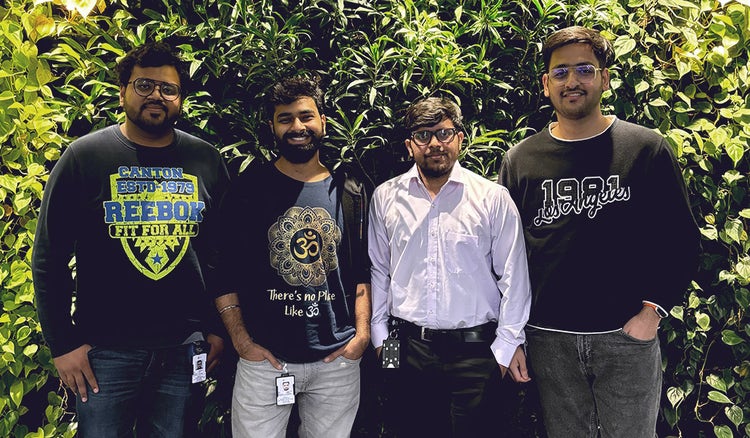
ZSers Yash Aggarwal, Umar Faruque, Aayush Khurana and Gaurav Yadav teamed up to take on the challenge. Drawing on their experience in AI and data analytics, they began by splitting the massive dataset into manageable sample sizes. From this, they identified three primary insights:
• The severity of each fall
• The activity performed before the fall
• The underlying cause of the fall
A key hurdle was determining a consistent way to label and categorize the narratives. Instead of relying on predefined labels, the team deployed large language models (LLMs) to read each narrative, generate appropriate labels and tag the data accordingly—an approach that set their work apart.
“ZS has used AI across areas from market research to clinical trials,” says Umar. “This challenge allowed us to apply that knowledge in a new context.”
Their innovative sampling technique and AI-powered categorization earned them the “Most Novel Approach” award.
“This is what ZS is known for,” Gaurav adds. “ZSers thrive on rethinking the process and finding better ways forward, rather than defaulting to the status quo.”
Yash agrees: “We take complex problems and apply the latest technologies to solve them in smarter, more innovative ways.”
Their approach revealed patterns that could help transform fall prevention strategies—from identifying key risk factors to understanding the context behind each incident. This methodology has the potential to be applied across other domains where narrative data is abundant but underleveraged.
This novel approach to organizing large data sets holds immense potential for application in similar situations across various domains. By harnessing the power of AI and machine learning, this innovative methodology enables efficient extraction of insights from complex data sets.
“Medical record narratives, like the ones we classified, are rich in potential, but often under-explored due to the challenges associated with manual coding procedures,” Aayush explains. “This new approach not only enhances the accuracy of analysis but also unveils patterns and relationships within the data that might otherwise go unnoticed.”
Leveraging such techniques in future projects can empower ZSers and their clients to navigate vast data sets, extract meaningful insights and make informed decisions, ultimately contributing to improved health outcomes around the world.
The team wants to extend a special thank you to Sagar Madgi and Mayank Shah.
To stay updated on how ZS is leading innovation, follow us on social media.
Life at ZS
Learn what it’s like to be a ZSer: Facebook, LinkedIn and Instagram
View ZS’s open roles.