Digital transformation in life sciences supply chain: Innovation, efficiency, resilience
Life sciences supply chains are under pressure from all sides. Challenges include rising costs, unpredictable demand, ongoing material shortages and shifting global dynamics. While the COVID-19 pandemic triggered widespread disruption, the challenges haven’t stopped. Evolving patient needs, regulatory requirements and the shift toward personalized therapies have made flexibility and visibility more important than ever.
As companies outsource more production to contract manufacturing organizations (CMOs) and contract development and manufacturing organizations (CDMOs), they face growing complexity and less direct control. At the same time, supply chain risks continue to mount.
To manage these pressures and stay competitive, life sciences leaders must prioritize digital transformation. Success depends not just on adopting new tools, but on integrating them with strategy to improve collaboration and build resilience.
A digitally enabled supply chain is no longer optional. It’s the foundation for a faster, more responsive and cost-effective future.
Adopting powerful solutions for life sciences industry challenges
The life sciences industry has increasingly embraced digital transformation to address longstanding challenges in supply chain and manufacturing operations. Companies in the early stages of digital adoption are accelerating automation in warehouses and manufacturing, while more advanced firms are implementing cognitive planning, digital twins, AI-powered predictive analytics and self-healing supply chains.
Notable innovations include:
Driverless forecasting: This automated approach reduces human error and enables more precise inventory management, ensuring that supply closely aligns with fluctuating market demand.
Procurement optimization: Advanced algorithms now evaluate historical performance data, market trends and supplier metrics. They streamline the supplier selection process, reduce costs and mitigate risks associated with supply chain disruptions and regulatory challenges.
Autonomous route optimization for cell and gene therapy (C>) deliveries: In the highly time-sensitive field of C>, AI-driven logistics systems are crucial for optimizing delivery routes. These systems use real-time data on traffic conditions, weather and specific delivery constraints—such as temperature control and handling requirements—to ensure the fastest and most cost-effective transportation of therapies to patients. By significantly reducing transit times and operational costs, these systems help maintain the integrity of sensitive biological materials, enhancing patient access to life-saving treatments.
External disruption sensing: Real-time monitoring tools continuously assess external factors—ranging from geopolitical events and natural disasters to sudden market shifts—providing early-warning signals and actionable insights. This proactive approach allows companies to swiftly adjust operations, secure alternative supply channels or reroute logistics to minimize the impact of unforeseen disruptions.
Together, these innovations have formed a robust framework for digital transformation initiatives that enable life sciences companies to navigate complexities more effectively. They’re vital for ensuring life sciences remains agile, competitive and prepared for future challenges.
Digital supply chain transformation: Life sciences at a crossroads
Life sciences has traditionally lagged in adopting transformative technologies. This delay has largely been due to stringent regulatory environments, complex cost structures and the high financial cost of drug development.
Today, the landscape is shifting dramatically. The rise of biologics and advanced therapies has increased the cost of goods sold, necessitating a strategic pivot toward technology to enhance efficiency and transparency. What’s driving this shift? The need to optimize production processes and improve supply chain visibility, ensuring that companies can meet the demands of modern healthcare. As a result, there is a significant push to digitize the life sciences ecosystem, with companies investing in advanced analytics, automation and AI to streamline operations and maintain competitiveness in a rapidly evolving market.
The life sciences industry stands at a critical crossroads. Digital technologies offer unprecedented opportunities for revolutionizing operations—yet adoption remains surprisingly constrained. While pockets of excellence showcase the potential of digital and analytical solutions, the broader industry continues to grapple with implementation challenges that limit widespread transformation.
Despite the transformative potential of digital technologies, their adoption within the life sciences industry has been limited. The gap between potential and actual gains often stems from technology gaps and management choices. Initial innovations streamlined routine activities but lacked the sophistication to transform supply chain management. As new digital solutions emerge, companies have an opportunity to significantly enhance supply chain performance. But many struggle to seize this opportunity due to a common oversight: failing to integrate operational changes with digital technologies. For instance, a healthcare company upgraded its enterprise resource planning (ERP) system to improve service levels but saw no improvement until it revamped its demand forecasting processes.
The current stand-alone solutions are strong, but many life sciences supply chain executives are increasingly frustrated by data silos. Plus, inflexible legacy infrastructure creates additional complications for digital transformation initiatives, insufficient end-to-end visibility and the underutilization of supply chain data.
There are other persistent challenges as well. As supply chain leaders told CHEManger International, executive buy-in, compliance concerns and a short-term mindset can all undermine sustained progress. On top of that, strict regulatory demands and the complexity of integrating data from varied, often outdated systems make it difficult to implement compliant and innovative digital solutions.
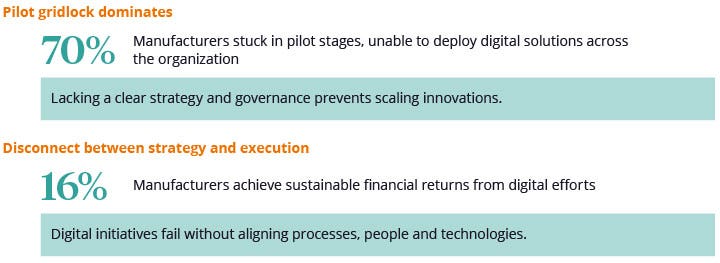
FIGURE 1: The adoption paradox: Limited implementation despite clear benefits
Overcoming barriers to supply chain digitization in life sciences: Maximizing ROI
Despite compelling examples of success, life sciences companies continue to face significant barriers that hinder widespread digital adoption. Identifying and addressing these challenges is crucial for developing effective strategies that unlock the full potential of digital transformation.
While companies are making substantial investments in digital transformation, many struggle to achieve its full return on investment (ROI). Several key challenges contribute to this gap:
1. Strengthening strategic alignment for sustainable impact
Many organizations focus on short-term gains and isolated technological initiatives rather than a cohesive digital strategy. This fragmented approach can lead to redundant efforts, conflicting priorities and missed opportunities for long-term growth. By integrating digital initiatives within a broader business model transformation, companies can drive sustainable competitive advantage and maximize long-term value creation.
2. Redefining success: Moving beyond traditional metrics
One of the primary obstacles to realizing full ROI is the reliance on conventional performance indicators. Many organizations measure success primarily through efficiency gains and cost reductions but overlook the broader business impact. A more comprehensive measurement framework—encompassing customer experience, workforce enablement and market positioning—can provide a clearer assessment of transformation success and long-term value realization.
3. Fostering a culture of innovation and momentum
A lack of recognition and communication around transformation successes can weaken organizational buy-in. Resistance to change often arises from uncertainty, skepticism and the fear of disrupting established processes. By actively celebrating wins and demonstrating the tangible benefits of digital initiatives, companies can cultivate a culture of innovation, accelerate adoption and reinforce the strategic importance of digital transformation.
Addressing these challenges will be critical for organizations that want to realize the full potential of their digital investments—ensuring not only short-term improvements but also lasting business impact.
Data challenges in digital supply chain transformation
Many organizations evolve over time, adopting different technologies and systems for various departments without considering interoperability. These organizations have developed isolated digital systems that prioritize internal data while overlooking external datasets and broader market signals. This reliance on proprietary technologies and the lack of integration standards further reinforces silos, making seamless data sharing and system integration difficult. In some cases, siloed infrastructure is intentionally maintained for security and compliance purposes, restricting access to sensitive data and processes. However, having a siloed infrastructure is a significant barrier to achieving digital transformation goals. It prevents organizations from accessing and integrating data across departments, limiting their ability to adapt and innovate.
Converging stakeholder priorities for end-to-end transformation
The life sciences industry’s digital transformation is a complex process shaped by the distinct priorities of IT leaders, business and analytics teams and chief experience officers (CXOs). Success depends on aligning IT modernization efforts with analytics needs and executive strategic goals.
IT professionals are expected to address technical debt—the accumulated burden of outdated systems, fragmented IT architectures and postponed upgrades. Legacy platforms such as laboratory information management systems (LIMS) and ERP tools often suffer from limited interoperability, compelling IT departments to dedicate 30%-40% of their resources to system maintenance rather than innovation. Meanwhile, business and analytics teams are tasked with ensuring data reliability. Within life sciences supply chains, fragmented data sources—ranging from isolated temperature monitoring logs to disparate supplier performance records—undermine confidence in analytics outputs.
At the executive level, CXOs are expected to convert digital transformation initiatives into tangible strategic benefits. This responsibility often falls to leadership roles like the chief digital officer, who combines operational management with forward-looking vision. Critical performance indicators such as time-to-market for new therapies and supply chain resilience metrics serve as benchmarks to measure the success of these efforts.
Reimagining supply chain digital transformation: ZS framework for end-to-end maturity
Comprehensive digital maturity represents both a challenging and essential objective for organizations embarking on digital transformation journeys. Arriving at this desired future state demands sustained commitment over multiple years and a flexible technological foundation capable of evolving alongside shifting organizational priorities.
To facilitate this progression, ZS has developed foundational elements that provide a strategic framework for establishing a robust digital ecosystem. Implementation of this model naturally varies across different industry roles and enables each stakeholder to contribute meaningfully to the transformation initiative. Together, these foundational elements create an integrated approach to digital advancement.
Responsibilities within life sciences digital transformation continuously evolve in response to technological progress and market developments. IT’s ongoing management of technical debt challenges, the needs of operational teams for reliable data access and executive leadership’s strategic performance monitoring together form an interconnected set of organizational imperatives. Aligning these role-specific requirements with the building blocks for digital transformation (see Figure 2) establishes the groundwork for more sophisticated capabilities such as predictive analytics implementation.
FIGURE 2: Building blocks for digital transformation
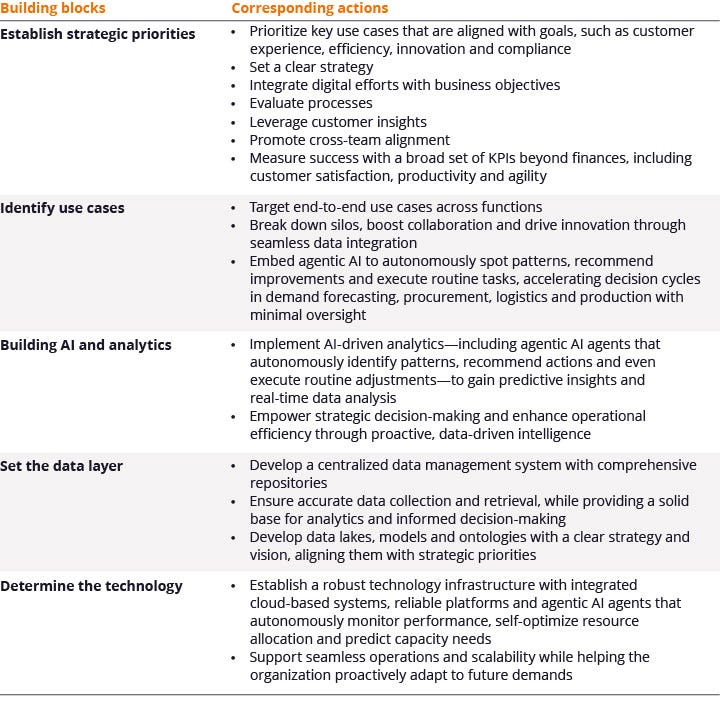
This framework is designed to provide a comprehensive understanding of how to approach digital transformation. A broader approach would be needed to understand the necessary investments, identify which layers to target and determine use cases to prioritize. It’s important to note this is a high-level strategy meant to guide initial planning before focusing on the broader picture and implementation. The model is inherently dynamic, allowing for adjustments based on the specific persona using it, as well as the unique business cases and challenges faced. Consequently, the layers can be reordered, deprioritized or prioritized according to the real-world context and specific use cases.
Embracing continuous evolution: Supply chain digitization is a journey, not a destination
Digital transformation is not a finish line but a journey of ongoing, impactful progress. With a bold vision, strategic roadmaps and incremental wins, organizations generate momentum that delivers lasting value, agility, resilience and competitive edge in an ever-changing landscape.
In life sciences, digital transformation unites commercial, R&D and supply chain and manufacturing—breaking down silos for real-time collaboration and integrated planning. For example, live analytics can steer R&D toward projects that match market trends and regulatory shifts. With so many geopolitical risks, tools like AI-driven production planning—which recalibrates schedules and costs as input prices shift—or digital twins—which simulate supply-chain vulnerabilities—become vital defenses.
Success requires both micro and macro approaches. Micro initiatives tackle tactical gains such as advanced demand-forecasting analytics in supply chain and manufacturing or automated marketing insights in commercial. Macro strategies align every function to shared goals like faster time-to-market, enhanced patient outcomes and strict compliance. Embedding supply chain and manufacturing principles across commercial and R&D means spotting bottlenecks early, optimizing manufacturing and accelerating launches of critical therapies.
3 recommendations for pursuing a digital transformation
To accelerate digital transformation in life sciences supply chains, leaders should anchor efforts in a bold vision, secure executive alignment and set aside budget for emerging technologies. By starting with focused pilots and maintaining agile governance, organizations can learn quickly, reallocate resources effectively and scale what works.
Recommendation 1: Think big and develop your vision
- Set a North Star. Articulate an aspirational, long-term goal for how digital will transform your firm’s competitive position and customer value.
- Secure leadership alignment. Unite the C-suite, business heads and IT around a shared vision that’s ambitious yet grounded in market, regulatory and cultural realities.
- Reserve budget. Conserve resources to explore breakthrough technologies—such as agentic AI, digital twins and advanced analytics—even if ROI is uncertain.
Recommendation 2: Start small
- Pick quick wins. Focus on high-impact, low-risk projects—like automating order-to-cash or demand forecasting—that can deliver measurable ROI in weeks.
- Form cross-functional teams. Empower small groups of business analysts, data scientists and engineers to drive each pilot end-to-end.
- Measure and iterate. Define clear success metrics, including cycle time, accuracy and cost savings, while using agile sprints to refine your strategy based on real results.
Recommendation 3: Stay agile and focused
- Adopt lean governance. Replace large committees with an agile digital office that convenes monthly to approve or discontinue projects based on their performance.
- Continuously prioritize. Keep a dynamic backlog of initiatives ranked by strategic impact and feasibility to ensure resources flow to the highest-value work.
- Cultivate experimentation. Approach setbacks as opportunities for learning, disseminate insights across the organization and scale only those pilot initiatives that meet or surpass predefined performance targets.
- Embed feedback loops. Use real-time dashboards and agentic AI assistants to surface risks, monitor adoption and adjust the roadmap as market conditions shift.
Think big and develop your vision. Start with small, incremental steps. Maintain agility and focus throughout the journey. By following these three steps, you can help position your organization for a successful digital transformation.