Addressing provider frustration: Transformation is urgently needed for prior authorization
Prior authorization (PA), however well intentioned, is instead at a breaking point. Inefficient processes and ineffective policies delay treatment and lead to unintended outcomes that frustrate health care providers and draw the ire of hospital networks. Payers who fail to monitor and identify provider abrasion and dissatisfaction—and take corrective action—risk unwanted business disruption. In today’s world, health plans measure provider abrasion qualitatively, relying on anecdotal evidence or feedback from network teams that are hearing about frustrations from their providers. We need to move away from a qualitative approach and look for a more quantifiable way to understand and effectively measure provider abrasion. By using data-driven metrics, plans can make targeted changes that are crucial to maintain positive relationships with provider networks.
This article explores the potential of PA and provider metrics as a proxy to identify and address provider abrasion. By analyzing these metrics, health plans can gain valuable insights into provider dissatisfaction and implement targeted remediation strategies.
The toll of prior authorization: Frustration mounts among provider networks
Within the past several months, numerous health plans have seen their operations disrupted because of PA. This administrative burden is causing a wave of dissatisfaction, leading some healthcare systems to take drastic measures. For example, in Indiana, Community Healthcare System dropped certain health plans because of high denial rates, especially for post-acute therapy referrals that were seen as unreasonable and a barrier for physicians to provide care effectively. Additionally, New York-based Community Care Physicians removed a health plan across 70 practices, citing the payer’s burdensome processes that delayed care and led to additional office visits and greater physician oversight.
Nationwide, healthcare systems are taking similar actions. They say undo administrative burdens and high denial rates stemming from payer concerns about fraud, waste and abuse are counterproductive. Practices must complete an average of 45 PAs per week, per physician, at an average cost of almost $44 for each denial they appeal. And more than one-third of physicians employ staff members who exclusively work on PA-related tasks such as requests, appeals, appeals follow-ups and other payer-required paperwork. Healthcare systems may suffer revenue losses from these decisions, but the real harm lies in barriers to access to care.
What’s more, regulators have taken notice. Earlier this year, the Centers for Medicare & Medicaid Services issued a final rule that requires payers to streamline PA processes and encourages them to use electronic PA (ePA) and increase transparency, beginning with 2027 plans.
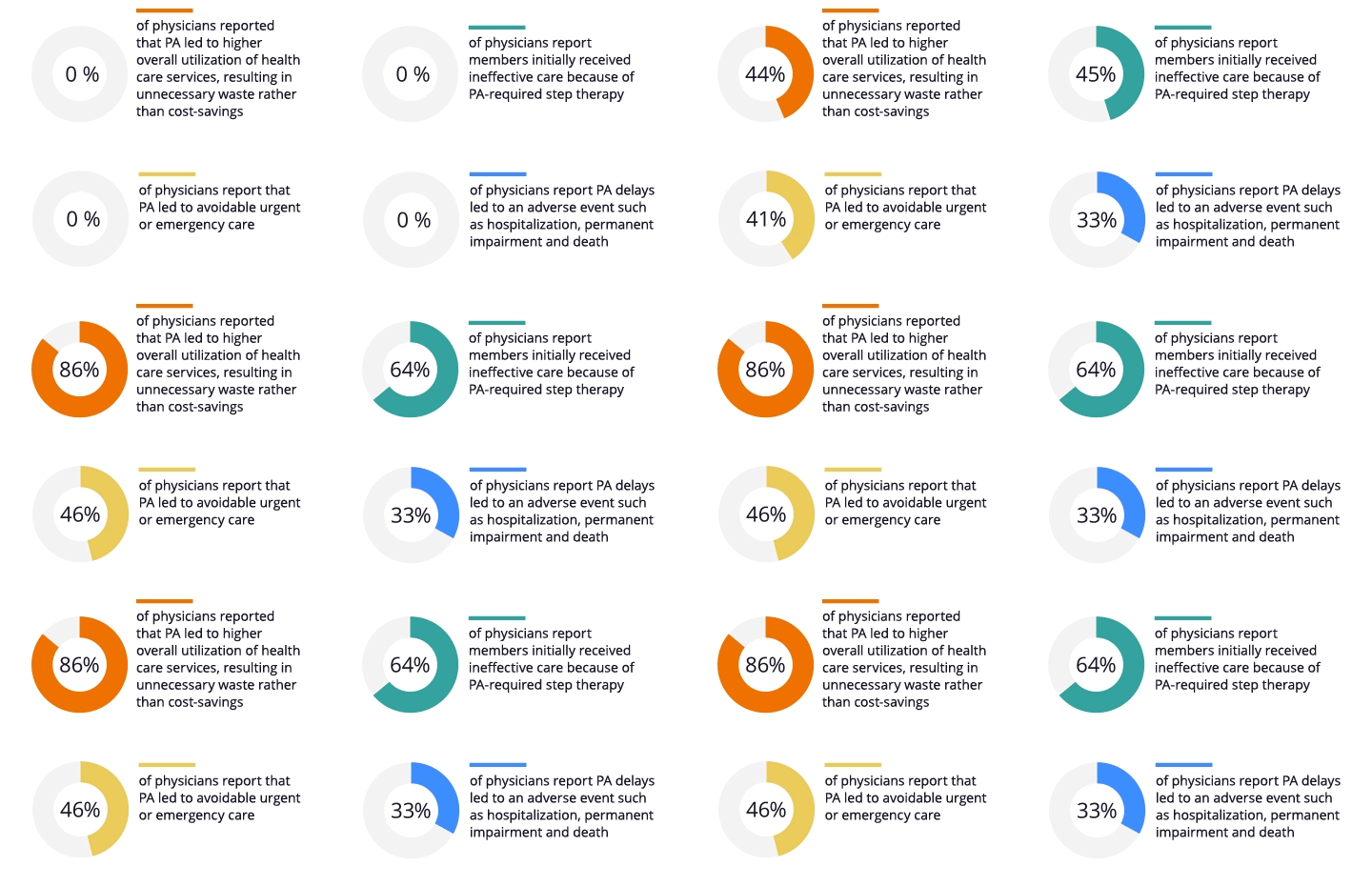
FIGURE 1: Healthcare providers are consistently frustrated with prior authorization
Uncovering provider abrasion: A data-driven approach
Health plans should use a data-driven approach to identify and measure provider abrasion caused by PA. When PA programs are not managed appropriately, they can cause a cascade of unintended effects for stakeholders that lead to significant abrasion. This can result in additional administrative costs from denials and appeals, reduced access to care for members, and restrictions on physicians’ ability to deliver care. These factors can potentially lower member satisfaction and lead to adverse clinical outcomes.
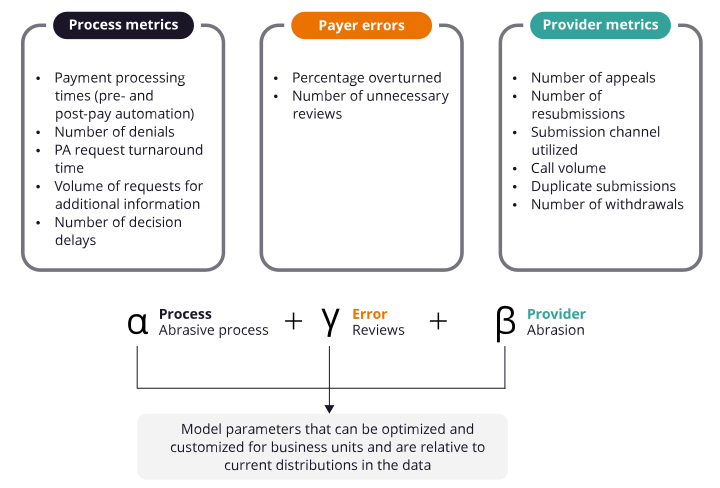
By collecting metrics, such as those listed in Figure 2, health plans can track provider abrasion over time, compare against industry benchmarks, and understand how PA policy decisions may influence abrasion levels.
Payers can then evaluate various metric categories to determine correlations that can help to infer the root causes of provider dissatisfaction and inform actions to take to counteract negative provider sentiment. For instance, a spike in the number of appeals by providers, coupled with an increase in the percentage of appeals overturned, may suggest inaccurate PA reviews are prompting more appeals. Conducting statistical analyses on these metrics can provide plans with a strategy to improve processes for all stakeholders.
FIGURE 2: Provider abrasion caused by the PA process can be measured and interpreted through systematic processes
Steps health plans can take now to decrease provider abrasion through enhanced prior authorization processes
Step 1: The first step for health plans to mitigate provider abrasion is focusing on their ability to identify and react to it. They must have analytic and statistical capabilities in place to derive insights from the data points they track—provider satisfaction, PA request approvals, denials and appeals and administrative costs—and evaluate how well the changes they implement improve results. Approaches payers can leverage include an ROI analysis for different procedure code groupings, especially high ROI services with low denial rates and tracking turnaround times, denial rates, utilization management productivity and PA code utilization.
Step 2: Health plans should also make informed decisions on different strategic approaches based on the cause of abrasion:
Burdensome submission processes:
- Data-driven gold carding program. This can reduce the admin burden for providers who consistently submit appropriate PA requests. A way to innovate this initiative is to streamline the process by using data to identify the most cost-effective physicians for enrollment. This includes a cost analysis of providers with low denial and high approval rates, minimal PA requests and value-based care agreements.
- ePA. Invest in technology solutions that automate and streamline the PA process, such as ePA systems. These systems allow providers to submit authorization requests electronically, reducing paperwork and administrative burden
Delays in PA decisions:
- Automated PA approvals. Leveraging automated processing, a plan can streamline its PA processes for near real-time decision-making for certain PA requests and specific providers or healthcare systems.
- Clinical decision support. Integrate AI-driven clinical decision support systems into PA workflows to provide real-time guidance and recommendations to reviewers. AI algorithms can analyze medical literature, guidelines and member data to suggest appropriate treatment options, alternatives and evidence-based criteria for approval.
- Resource planning. Health plans should forecast PA volumes to understand the right level of resources needed to manage PA volume. This plan should account for differences in timing of the year and level of complexity of request. Moreover, health plans can model scenarios to determine the right level of staff needed to manage PA requests with appropriate turnaround times. The model should consider physician gold carding rates and the staffing needed for each stage in the PA process.
Confusion on PA rules and requirements:
- Enhanced communication and transparency. Foster open communication and transparency with providers by proactively sharing information about PA policies, updates and changes. Maintain clear channels of communication for providers to ask questions, seek assistance and provide feedback on the authorization process.
Step 3: Preventing and reducing abrasion isn’t a one-time fix. It’s an ongoing process that requires continuous monitoring and improvement. Here’s how health plans can ensure that their efforts are effective and adaptable:
- Regular data analysis. Schedule frequent reviews of the data points identified in Step 1. Health plans can track the impact of changes made and identify areas for further improvement.
- Feedback mechanisms. Establish clear channels for providers to provide feedback on the PA process. These insights can be collected through surveys, focus groups or dedicated communication channels.
- Benchmarking. Regularly benchmark PA turnaround times, denial rates and provider satisfaction scores against industry standards. This data helps health plans identify areas where they excel and areas needing improvement compared to their peers.
You can’t manage what you don’t measure
Many payers are making strides to alleviate provider friction instigated by PA, but without clear targets, their efforts resemble a blindfolded dart game. By harnessing the power of data collection and statistical analysis, payers can unveil the precise areas requiring attention to mitigate provider abrasion.
Once these critical targets are identified, the implementation of clear PA policies and appropriate PA processes can unlock a plethora of benefits across the healthcare spectrum, extending beyond mere physician convenience. Collaborative efforts between payers and providers can streamline PA processes, fulfilling their shared commitment to improved healthcare.
Prompt decisions not only expedite access to necessary treatments but also enhance member well-being, potentially reducing costs and averting complications. This efficiency frees up valuable time for clinicians and their staff, enabling them to concentrate on their primary objective: delivering exceptional care.
Evaluate the maturity of your PA program across five key performance areas by taking our short interactive quiz and learn how to advance the effectiveness of your program.