Revolutionizing formulary compliance through multiagent AI systems
Maintaining formulary compliance amid complex contractual obligations and multitier rebate structures is a challenging task in the pharmaceutical industry. Pharmaceutical manufacturers and pharmacy benefit managers (PBMs) frequently enter into contracts that stipulate rebates based on specific criteria such as formulary status, the number of drugs sharing the same status and other special conditions. Ensuring accurate and timely rebate reporting and validation is crucial for compliance and financial integrity. As the number of specialty products being managed increases, more nuanced formulary management and prior authorization criteria lead to additional operational complexities.
AI agents can transform the manual, error-prone process of formulary compliance by improving accuracy, efficiency and operational effectiveness. This article explores a framework where integrated AI agents collaborate to address formulary compliance by dividing the process into manageable subparts, each managed by specialized agents, with an orchestrating agent unifying the workflow.
The challenge of formulary verification
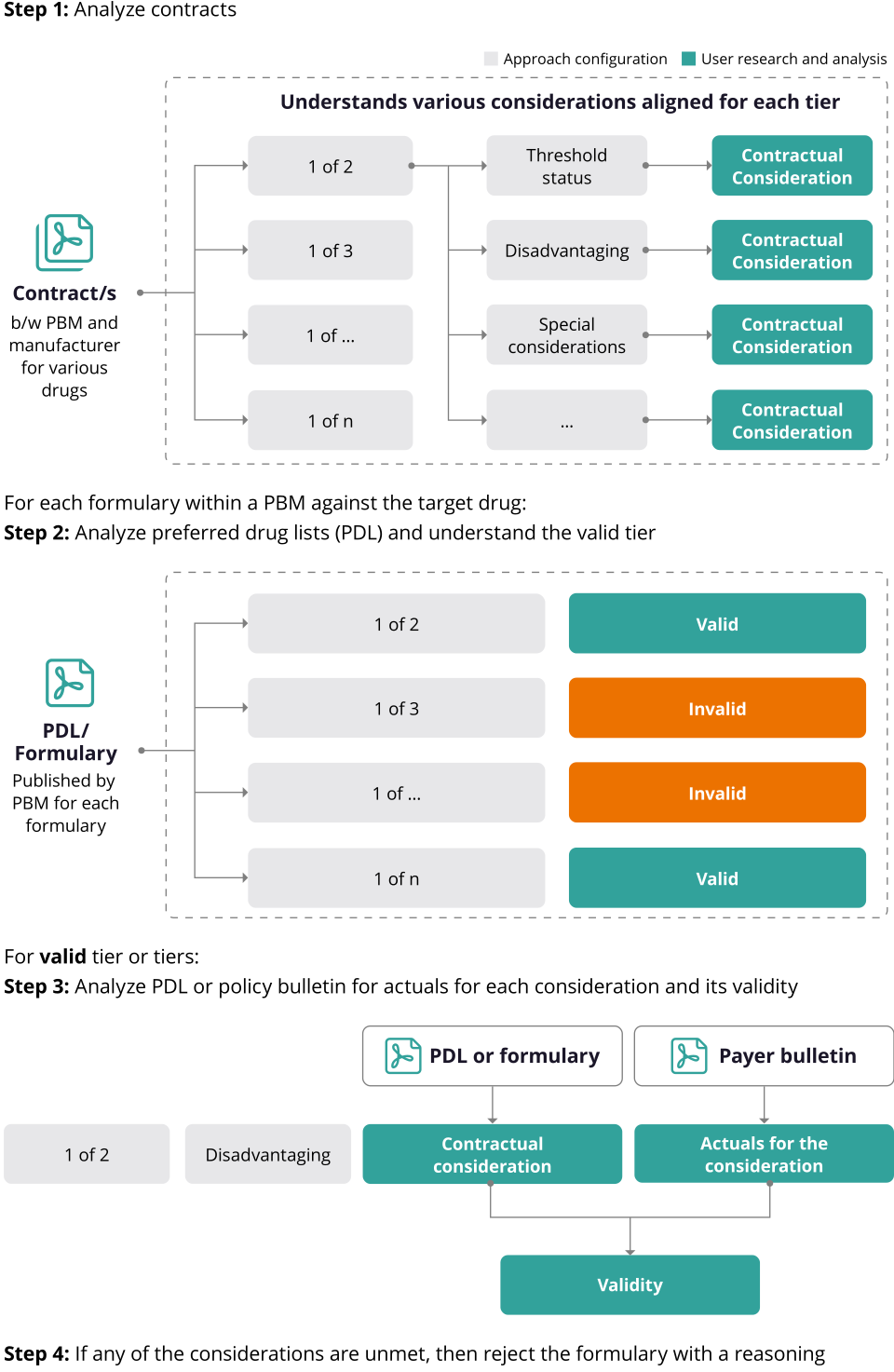
Ensuring formulary compliance entails confirming that the actual formulary status aligns with the contracted rebate conditions. This verification process spans multiple PBMs, document types and a vast array of drugs, making it labor intensive and prone to errors. Figure 1 illustrates a representative process.
FIGURE 1: Deconstructing a typical formulary verification process
Traditional methods rely heavily on manual effort, which introduces several limitations:
- Reliance on account executive teams: Account executive teams are often tasked with gathering and verifying formularies for their accounts. This process is time-consuming and takes away from their primary customer-facing activities, affecting overall productivity and customer engagement. There may also be inconsistencies in the process across the account executive team.
- Infrequent verifications: Due to the manual nature of the process, formulary verifications are therefore typically conducted a few times a year and sometimes as few as once. Depending on when the formularies are obtained, this may result in a very different picture of what your access is and how it evolves over time.
- Limited coverage across payers and PBMs: Trade-offs are often made that limit the extent of coverage across different payers and PBMs.
A combination of these limitations leads to incomplete verification, increased risk of noncompliance and additional revenue leakage due to potential rebate overages.
As data volumes and contractual complexities grow (for example, for specialty therapies where payer management through prior authorizations are more nuanced), the potential for mistakes and oversight increases. An AI-driven ecosystem approach can address these challenges by providing a scalable, accurate and efficient solution for formulary verification and formulary compliance.
Exploring an AI-first approach to formulary verification
To effectively manage the complexity of formulary verification, an AI-driven process can be divided into several subparts, each aligned to an AI agent with a specific function. This division allows for focused and specialized handling of different aspects of the verification process, ensuring thoroughness and accuracy. Here’s a step-by-step breakdown of how the AI agents could operate:
Step 1: Data ingestion: Develop smart pipelines to scan, extract and standardize data, tailoring the process to each AI agent’s needs. This involves creating structured databases directly from documents for agents that require organized data and vectorizing documents for agents dealing with complex, unstructured content. Sources could include:
- Web scraping: AI-driven web scraping tools can continuously scan and extract relevant data from public websites, ensuring up-to-date information on formularies and policies.
- Historical repository of PDFs: AI can manage and process large repositories of PDF documents, converting unstructured data into a structured format that can be easily analyzed.
- Third-party sources: Collaboration with third-party data providers of claims, utilization and formulary information can offer access to curated data sets, links and documents essential for formulary verification.
- Documents from PBMs: Automated systems can efficiently handle and organize documents sent directly by PBMs, ensuring all relevant data is included in the verification process.
- Automation: AI tools bring all these sources together, standardizing and enriching the data to ensure it is ready for further processing by specialized AI agents.
Data ingestion brings these data sources into a unified layer that the AI agents can process.
Step 2: Specialized AI agents: Multiple AI agents are developed, each with specific capabilities to handle different aspects of the verification process. These agents include:
- A preferred drug list (PDL) agent that determines the valid tier for each drug by analyzing PDL documents.
- A policy bulletin agent that verifies policy bulletin considerations and ensures all special conditions and considerations are met.
- A prior authorization agent that understands the criteria for prior authorizations and reviews prior authorization documents to ensure all special conditions and considerations are met.
- A contracts agent that ensures that formulary listings comply with contractual obligations by examining contracts to verify that reported formulary statuses meet rebate conditions.
- An analytic signals agent that establishes and triangulates through analytic and machine learning signals to detect market share similarities or differences for a given formulary position. This agent would use Rx or claims data (for example, contract data, PBM group purchasing organization portals or third-party data) and third-party formulary data to develop and monitor key performance indicators for formulary compliance.
- A summarization and recommendation agent that compiles findings into concise reports. This agent generates summaries and recommendations based on the findings from other agents, as well as using AI to detect anomalies in share, volume and enrollment at the plan or formulary level as a way to detect potential noncompliance. This includes triangulating data through third-party sources to provide a comprehensive overview.
Step 3: Workflow setup: Planning agents coordinate the workflow of all the specialized agents, managing the overall process, ensuring each agent completes its task and passing relevant data and insights to the appropriate agent.
Step 4: Human review: Despite the high level of automation, human oversight remains crucial. The AI agents provide detailed reports, recommendations and references, which analysts then review to ensure accuracy and make final decisions.
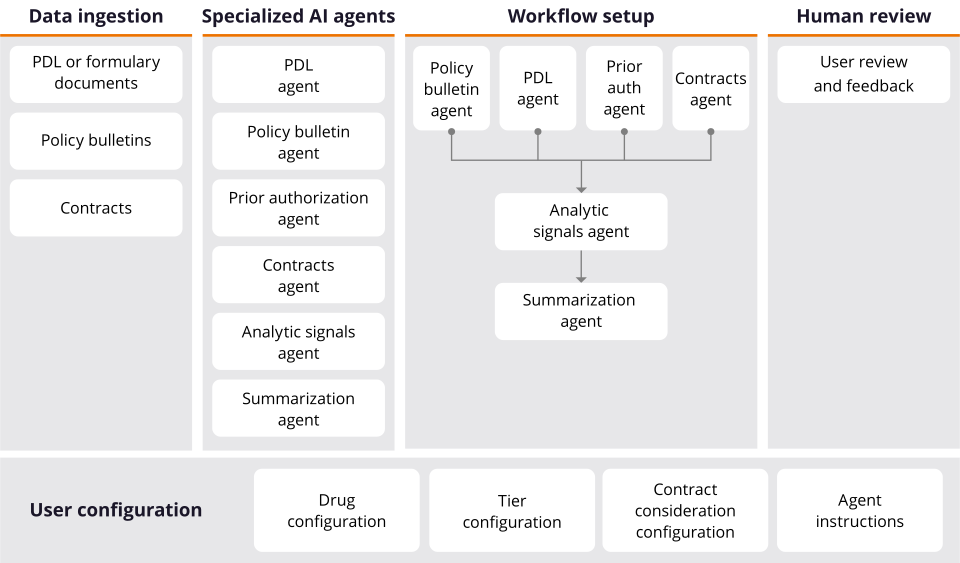
Figure 2 shows how smart AI agents can complete the formulary process based on a user-defined plan.
FIGURE 2: How AI agents can automate the verification process
Value of an AI-driven approach
The AI agents not only automate the verification process but also enhance the overall quality and reliability of the results. By continuously analyzing and learning from data, the agents can identify discrepancies and ensure that all contractual considerations are met. This supports increased accuracy, as AI agents reduce the likelihood of human error, ensuring that rebate reporting is precise and compliant with contractual terms. It also supports operational efficiency, as automating repetitive and labor-intensive tasks frees up valuable time for analysts, allowing them to focus on more strategic activities. Finally, it encourages scalability, as the AI-driven solution can easily scale to accommodate increasing volumes of data and complex contractual structures.
The integration of AI agents into the formulary verification process represents a significant advancement in contract compliance. By supporting more efficient data ingestion and automating complex and repetitive tasks, AI agents enhance accuracy, efficiency and scalability, enabling pharmaceutical companies to navigate the intricate landscape of rebate structures and contractual obligations with greater ease and confidence.
The collaborative effort of multiple AI agents, each specializing in different aspects of the verification process, exemplifies how technology can transform traditional workflows. As AI continues to evolve, its applications in automating and optimizing compliance processes will expand, driving further improvements in operational effectiveness and revenue management.
Shashwat Yadav and Vikas Srivastava, who work for SyncIQ.ai, contributed to this article and collaborated in validating the approach using their multiagent framework.
Related insights
zs:topic/ai-and-analytics,zs:topic/value-and-access