From patient outcomes to business results, CONTEXT matters for pharma
Imagine you’re an urgent care doctor standing across from a new patient. What would your rapid decisions about their healthcare be based on?
Maria watched this unfold recently with her mother at urgent care after she went in because of a persistent fever and cough for several days. The doctor did everything “right” in making a strong assessment in the moment, but he didn’t know her mother’s context. Her mother’s demographics and demeanor would suggest she is a well-off, relatively healthy, likely compliant individual. But this is absolutely wrong. She’s from a “grin and bear it” South Philadelphia Italian family. She’s an educated clinician who reads clinical trials and will form her own opinion before taking a recommended course. She doesn’t like to take medication and will talk herself out of it. And she recently retired and is living in a new location on a fairly tight budget. So, the decision the doctor made—though clinically correct—will likely not carry through to the outcomes expected for someone like Maria’s mother.
Context matters. It matters not just in the recommendations we make, but in the actions the other person takes. If we want to change behavior, we have to understand context.
To change customer behavior, context matters
ZS’s vision for pharma’s commercial model of the future focuses on driving behavior-changing, personalized customer experience at scale. The omnichannel and digital revolution pointed us in the direction of greater customization, and now AI is allowing for deeper personalization at scale. But what about “behavior changing?”
FIGURE 1: Envisioning the future commercial model
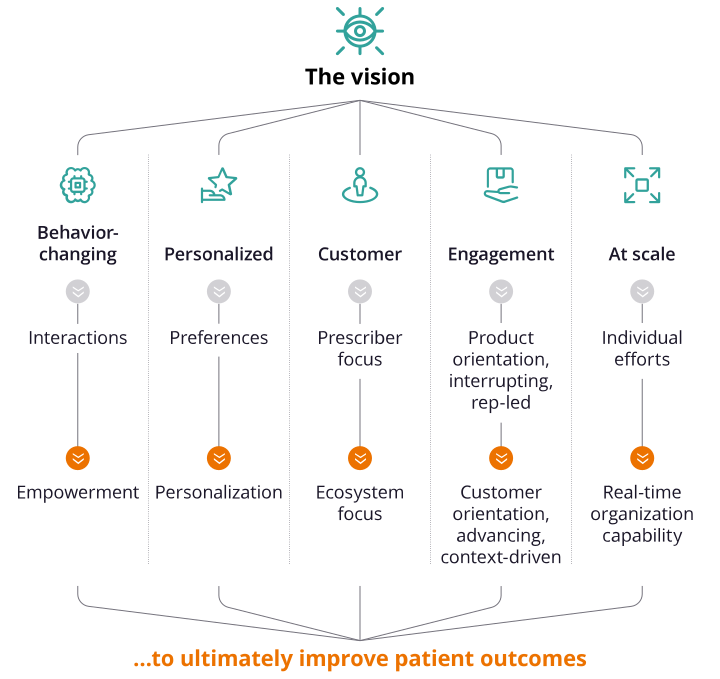
Understanding the actions of customer behavior is crucial for any business measurement and understanding, but it’s understanding the rationale and context behind those actions that truly unlock the deeper ability needed to drive meaningful interactions and relationships. More importantly, understanding customer context helps us know what to do to make progress with customers and advance them on their journeys.
The vision of behavior-changing, personalized customer engagement at scale is not a vision of better last-mile engagement. It’s a vision of evolving as an end-to-end organization to understand and act around context.
Figure 2 highlights the three steps we recommend to understand and act around context:
FIGURE 2: Actions organizations should take to understand and act around context
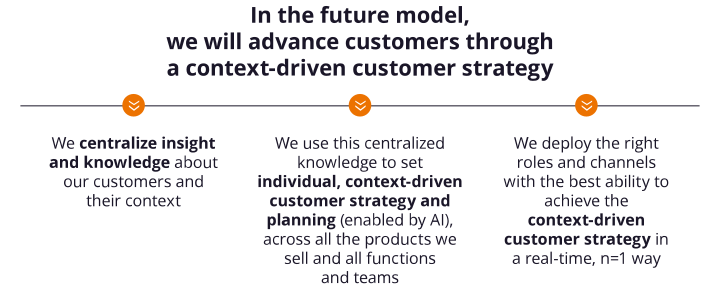
This article explores why context matters in the future model and how we can harness it to enable our organization toward context-driven action.
Defining CONTEXT and its value in differentiated data strategy
Biopharma has focused its data strategy on gathering behavioral information that supports our understanding of business performance. These data points, represented in the outer ring of Figure 3, are easy to collect, structured information about our customers. They represent classical demographics and measures but are merely proxies for what we really want to know about a unique customer: who they really are and why they do what they do.
FIGURE 3: The context wheel helps us see customers more fully
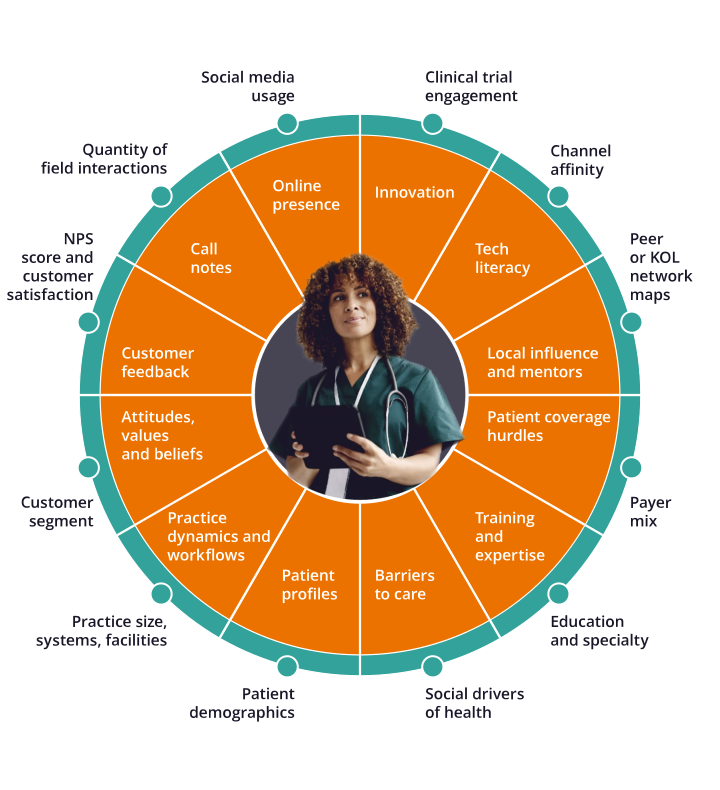
All of these make up what we call CONTEXT (which stands for customer insights, observations, needs, trends, environment, experience and touch points).
When we leverage these proxies to direct engagement with our customers, we may have some success, but we are assuming something about our customer’s behavior that may have nothing to do with their thoughts about a brand. A few examples:
- When we see a slowdown in patient starts at a doctor’s office, we might be tempted to believe that it’s because they interacted with safety content, but it could just be a function of office dynamics (for example, high workload) or a change in their office’s overall treatment approach for a disease state based on certain markers. It’s not our content, it’s their circumstances.
- We see that a doctor may show a high affinity for products and messages around low out-of-pocket costs. But this provider has actually been a caretaker who values anything that makes managing health easier for the patient. In this case, we may miss an opportunity to leverage a strength of our product.
There’s a lot of optimization still to be found in managing by proxies and affinities. But interaction effectiveness in our classic model only goes so far. If we want to change customer behavior, if we want to meet them where we are, we need CONTEXT as our foundation. Because CONTEXT tells us the barriers and drivers behind the action.
The adage of the 9 pharma sales rep calls
Remember that old adage, “It takes nine calls to get the first script?” In truth, it took nine visits by a sales rep, delivering the content we prepared in our product-centric interruption model before we saw a change in behavior. But was it really nine calls from the rep or that in the ninth call, the doctor’s context had changed enough that the relevance of the message and their receptivity to the product was ready for the interaction? Was it that in between the first and ninth calls, they heard from other sources—some of them from the company’s other functions and efforts? They spoke to peers, likely observed or heard about some patient experiences. Their vantage and understanding shifted.
Imagine if we understood that CONTEXT. We could be not only more relevant and insightful sooner, but we could also drive business faster and more efficiently by shrinking that window of readiness to bring the product to patients.
If we can shift our focus as an organization to the pursuit of that inner ring of knowledge about our customers, the possibilities at all stages of engaging them open up.
If we had CONTEXT, we would develop vastly different marketing messages that address barriers instead of product attributes. If we had CONTEXT, we would be able to create true longitudinal customer plans to overcome those barriers. If we had CONTEXT, we would deploy different channels with acute purpose and timing.
Introducing CONTEXTstream for pharma’s commercial model
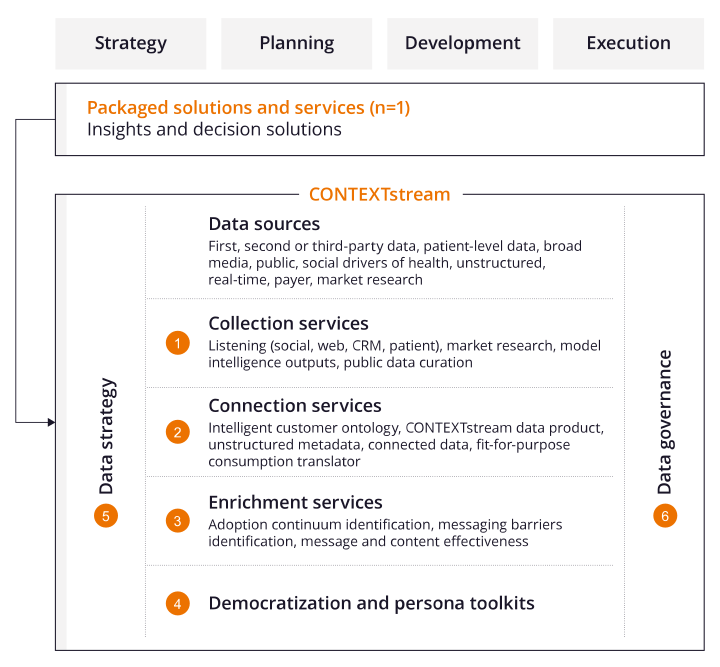
When we talk about collecting CONTEXT, you may envision data strategy or enhanced customer 360s. But this is a fundamental change—a new way of working across the enterprise, built on a foundation of CONTEXT that every function contributes to and acts upon. This requires much more than the technology and processes; we have to think about it as a living system. That system is CONTEXTstream. Organic and ever-evolving, CONTEXTstream will enable behavior-changing, personalized customer engagement at scale. It is built on four key pillars:
- Collect the data using a robust first, second or third-party data strategy that captures unique contextual knowledge about customers
- Connect the data across all parts of the organization that touch the customer
- Enrich the connected data to drive understanding and action
- Equip the organization by recognizing what matters to each stakeholder and giving them tools that clear the path for use of the data
FIGURE 4: Building blocks for CONTEXTstream
Collect pharma customer data using a first, second or third-party strategy
How we think about collecting should lean heavily on a few core elements:
- Designing a robust first-party data strategy
- Leveraging information that we already have, but fail to use, in our organization today
- Making collecting the data a full-enterprise endeavor across functions
It’s not uncommon for a pharma organization to realize that it has dozens of people from different parts of the organization touching a customer. Effectively, everyone and no one “owns the customer,” and as a result we’re not leveraging our full organizational understanding of customer CONTEXT. If we could collect the data from all existing customer interactions—all field functions, med info, patient services hub and other access points—we could begin our journey to CONTEXT with a robust and meaningful data set.
And we can compliantly collect this information. In fact, as long as we have a good rationale for why it will help us drive improved customer engagement, we can collect most information about customers, with some very specific exceptions like how a physician is compensated.
Gathering much of this information via field feedback loops is perhaps the most common pilot being explored in the industry today, but there are also AI-enabled tools that can mine and collect data from internal and external sources as part of a first-party strategy.
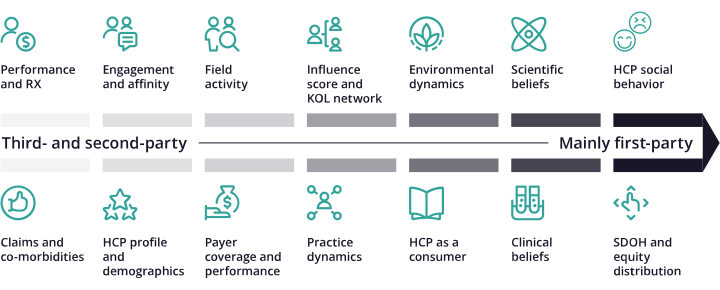
Even gathering 20% more information about 10% of our customers is a good start. Figure 5 shows the several categories of customer attributes that can be derived from first-party data and associated customer mechanisms.
FIGURE 5: Aligning your capabilities to your existing data ecosystem
To get started, we recommend establishing a formal approach for all first-party collection:
- Identify key objectives for data collection
- Identify “listeners” across key platforms and channels (for example, CRMs, patient call centers, market research, targeted social listening, competitive intelligence, web listening and public data curation)
- Collect and improve listening interfaces
- Connect and project wherever applicable
Connect pharma customer data across the enterprise
Connecting data and enabling it for use across the enterprise requires thinking differently about tools and systems. How do we connect various data infrastructures and analytics systems in ways that bring our living system to life, flowing it into our enterprise in a way that makes it easy to leverage across use cases?
The focus on first-party feedback, coupled with the desire to eliminate organization silos, will drive significant changes in the connection constructs in your ecosystem. To accommodate all of the diversity within first-party data, most companies will need to invest in a CONTEXTstream data product. This product will enable a federated integration of diverse data sources by providing a common vocabulary or semantic framework to represent healthcare provider (HCP) information to understand attributes, roles, specialties, affiliations and relationships with other entities.
Enrich pharma customer data for better engagement
The connected data opens up the opportunity for what we believe is the most fun for those who love the analytic art of the possible: Enriching the data.
Now that we have collected and compliantly connected the information, we need to focus on enriching it with analytics. For example, imagine if through our patient services, access and population data, we created new attributes for HCPs like:
- Percent of patients calling the hub with questions mapped to HCPs
- Rating of therapy aggressiveness built on their average time to switch
- Adherence scores on the basis of their populations versus the average
- Barriers related to access that drive longer cycle times with HCPs
These types of enriched attributes will now start to drive a pivot in engagement and messaging strategy across a cross-functional team, along with a decisive shift toward more contextual engagement across functions. We expect that most companies will focus on identifying and deriving a broad set of characteristics from different data sources.
Enriching the data will enable us to create longer-term augmented profiles and customer data and will be an important key to data differentiation and engagement effectiveness—not just with HCPs, but organized customers—in the future.
Equip the pharma organization to use the customer data
As we reimagine our processes so that our organization can work with CONTEXT, each function needs to have compliant access to the data. But access alone is not enough. An approach to using CONTEXTstream will not be complete without equipping all functions to use the data effectively. This means giving them tools that make it easy and empower them in ways that enhance or enable changes in processes and ways of working.
Toolkits will be varied and expand over time, but here are some starting ideas:
- Audience exploration and activation: A knowledge-graph-based toolkit with the ability to deep-dive from cohort or audience-level contextual insights to n=1 contextual insights that can provide valuable input into planning, development and engagement activities. This will also include a customer journey visualizer or mapping mechanism that can help in understanding the retroactive journey for a customer but also provide a drag-and-drop interface into designing the future journey (with inputs from AI decision tools and insights).
- Action insights and co-pilot: Tied to the audience exploration will be insights and nudges directly surfaced to the persona, both around channel-level recommendations based on the contextual understanding of the customer and prescriptive actions. In addition, this will include an AI companion for the personas to ask questions and get responses based on the latest understanding of the customer. In addition, the co-pilot will be used alongside “pulsing” from HQ to fill gaps in understanding regarding key customers to strategically complete the feedback loop around customer understanding.
- Message and content recommender: This will provide key recommendations around message and content planning based on a combination of audience and n=1 insights developed through CONTEXTstream and response modeling based on previous engagement across modular message fragments. These recommendations can be used both for planning and development as well as mapping to the journey visualizer for future engagement guidelines.
Next steps toward pharma’s CONTEXT-driven future
CONTEXTstream is not only an ambitious vision; it’s the foundation of the commercialization and operating model of the future. If we really want to drive behavior-changing, personalized customer engagement at scale, we cannot do it without meaningful and differentiated customer CONTEXT that we turn into action.
Companies can start by adapting the four pillars mentioned here. You can take the first steps by mapping the “CONTEXT wheel” for all customers for a given brand and taking advantage of the rich information that lives in your field forces’ minds about their customers via field feedback loops. In the competitive future, customer relevance wins engagement—and CONTEXT will be your differentiator.
Related insights
zs:topic/marketing,zs:topic/sales,zs:topic/sales-compensation,zs:topic/strategy-and-transformation,zs:topic/data-digital-and-technology